
The Blank Page Was Accidentally Doing a PM’s Job For Them

Introduction
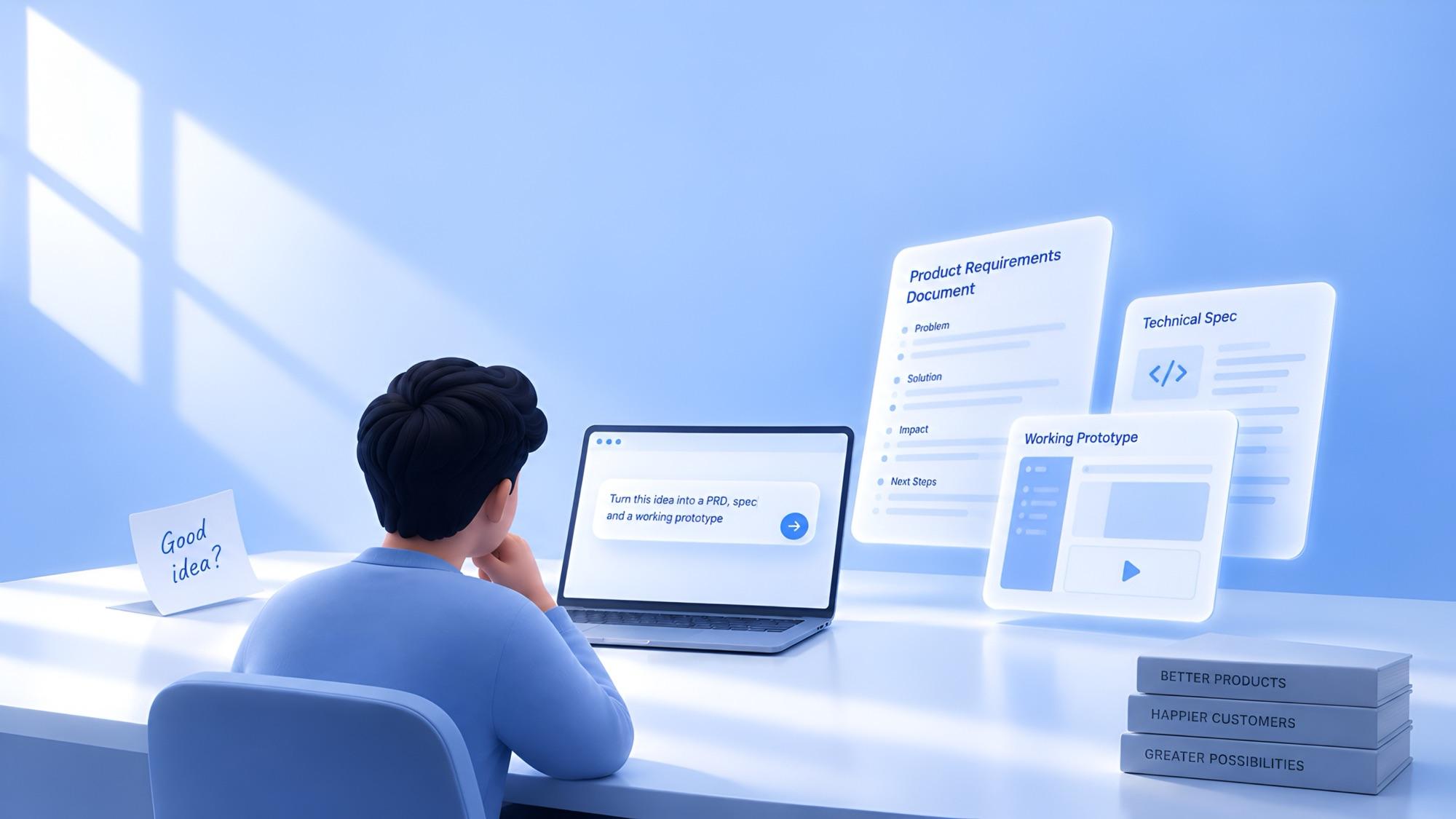
Writing a PRD from scratch used to take real effort. So did a first-draft spec, or a rough prototype. That friction was annoying — and it was also, quietly, doing a filtering job nobody assigned it. If an idea wasn’t worth the hours it took to write up properly, it often didn’t get written up at all. The blank page was an accidental gate.
AI removes that gate. A rough PRD, a first-pass spec, even a working prototype can now exist in minutes. That’s a genuine gain for good ideas — and a genuine risk for ideas that were never good enough to survive the old friction in the first place.
What Disappears When Writing Gets Easy
- The forcing function disappears. An idea no longer has to be strong enough to justify the effort of documenting it. It just has to be typed.
- Documents multiply faster than judgment does. A team can now produce five PRDs in the time it used to take to produce one — but evaluating five well still takes real thought, and that part didn’t speed up.
- Speed starts looking like progress. A polished-looking PRD generated in ten minutes can read as more “ready” than it actually is, simply because it no longer carries the visible evidence of effort a hand-written one used to.
None of this means AI-assisted drafting is bad. It means the gate that used to sit before writing has to move to after writing.

Where the Gate Needs to Move
If the blank page isn’t filtering ideas anymore, something else has to:
- A clear “why now” test — not “can we build this,” but “why does this deserve a slot this quarter over everything else competing for it.”
- An explicit trade-off, stated in the document — what doesn’t get built if this does, spelled out, not implied.
- A second read for what’s missing, not just what’s written — an AI-drafted PRD is good at representing the information it was given. It won’t flag the enterprise commitment or the engineering constraint nobody mentioned in the prompt.
Final Thought
Making documents easier to produce was never going to make decisions easier to make. The blank page used to do a small, invisible job — keeping weak ideas from reaching a roadmap review fully formed. Now that it can’t, that job has to be done on purpose, by a person, after the draft exists — not by the accident of how hard writing used to be.
Learn how leading teams turn feedback into actionLearn How Leading Teams Turn Feedback Into Action

The Blank Page Was Accidentally Doing a PM’s Job For ThemThe Blank Page Was Accidentally Doing a PM’s Job For Them
Writing a PRD from scratch used to take real effort, and that friction was quietly doing a filtering job nobody assigned it. AI removes that gate. A rough PRD, a first-pass spec, even a working prototype can now exist in minutes — a genuine gain for good ideas, and a genuine risk for ideas that were never good enough to survive the old friction.Writing a PRD from scratch used to take real effort, and that friction was quietly doing a filtering job nobody assigned it. AI removes that gate. A rough PRD, a first-pass spec, even a working prototype can now exist in minutes — a genuine gain for good ideas, and a genuine risk for ideas that were never good enough to survive the old friction.
18 Nov 202618 Nov 2026

AI Turns Customer Research From an Event Into a SystemAI Turns Customer Research From an Event Into a System
Customer research used to be something a team scheduled — a round of interviews, a quarterly survey, a sprint before a launch. Structurally, that was always a snapshot. AI changes the cadence, not just the speed: research becomes a standing picture rather than a periodic report. But a continuously updated picture can look comprehensive without being representative.Customer research used to be something a team scheduled — a round of interviews, a quarterly survey, a sprint before a launch. Structurally, that was always a snapshot. AI changes the cadence, not just the speed: research becomes a standing picture rather than a periodic report. But a continuously updated picture can look comprehensive without being representative.
16 Sep 202616 Sep 2026
Security & Compliance You Can Trust



Security & Compliance You Can Trust
See how Pulse works with your data
Book a Demo