Prioritise: Why Roadmaps Fail Without Decision Intelligence
Introduction
Roadmap meetings shouldn’t feel political. Support wants stability. Sales wants features. CS wants churn fixes. Everyone is right.
Every product roadmap looks rational on paper. In reality, most are shaped by negotiation — support escalations, sales requests, leadership intuition, and customer anecdotes. All valid inputs, but none objective.
Prioritisation is one of the hardest problems in product management — not because teams lack ideas, but because they lack a system for deciding what actually matters.
Strategic Highlights
- Pulse turns themes into backlog candidates with weighted business impact.
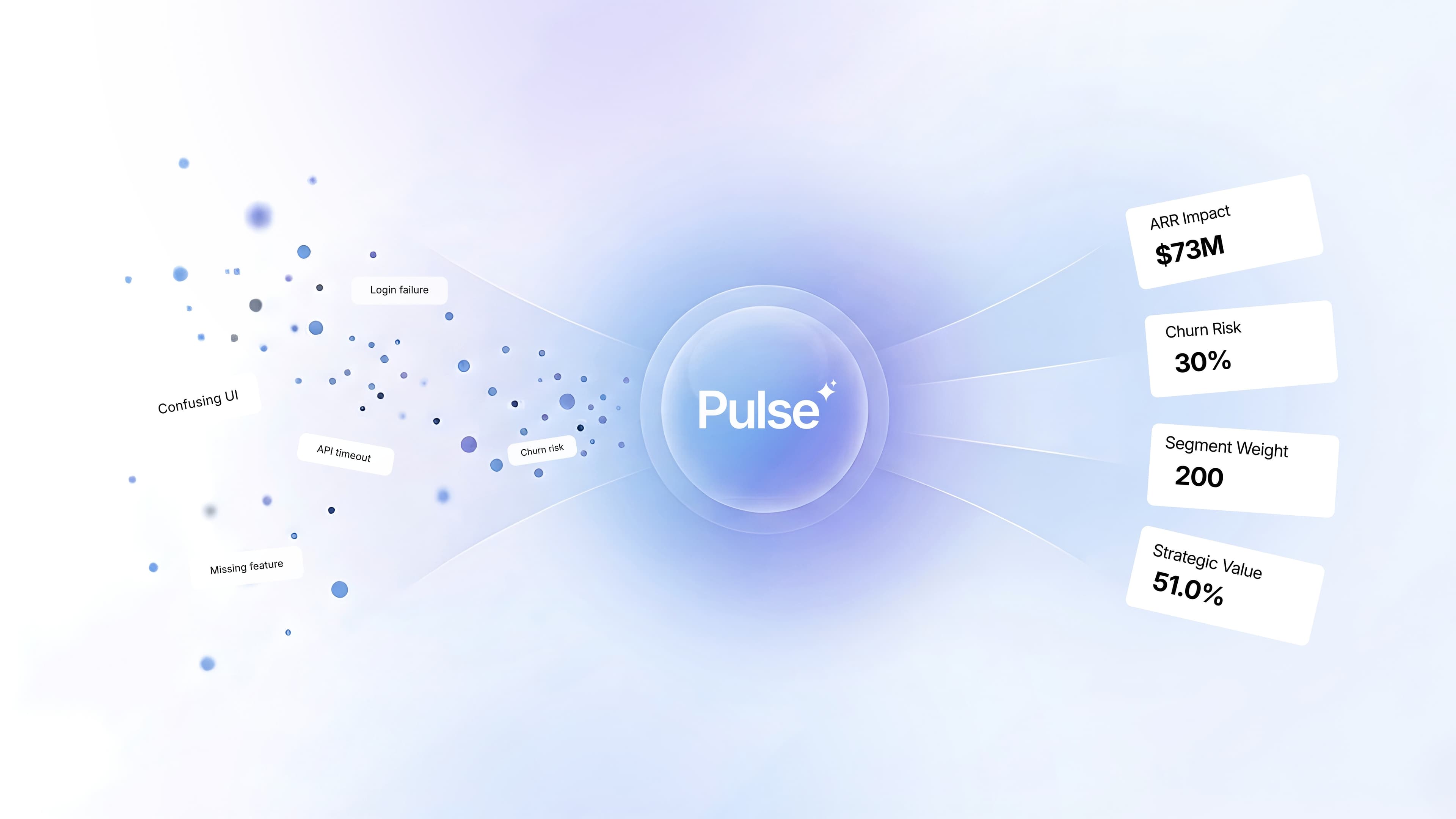
- Each item carries: ARR exposure, Churn probability, Segment weight, and Strategic account impact.
- You define the strategy rules: Enterprise > SMB, Renewal risk > feature requests, Core workflows > edge cases.
- Pulse applies rules continuously as feedback evolves, updating priorities in real time.
The Illusion of Priority
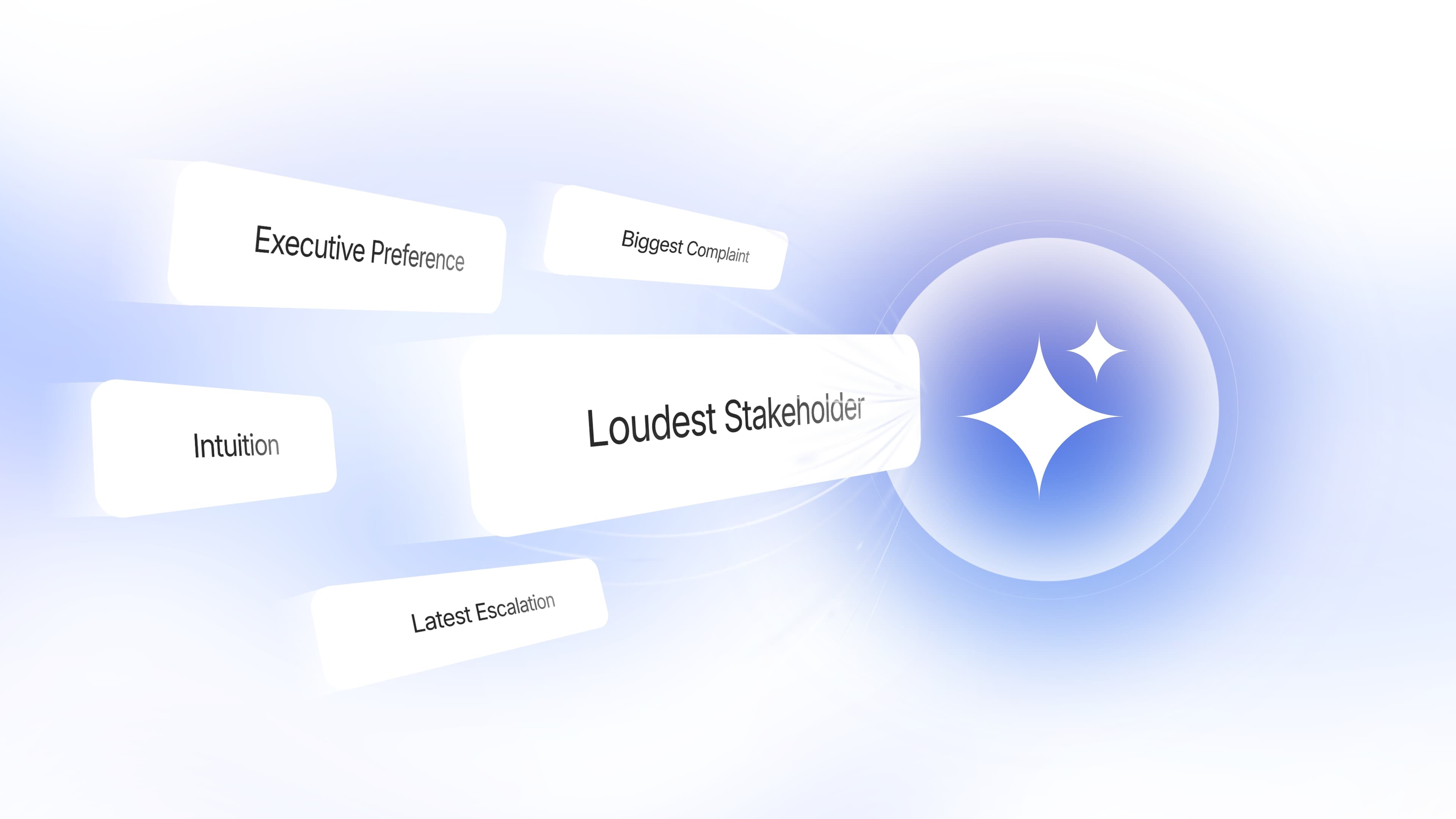
Many organisations believe they prioritise logically. In practice, prioritisation is often driven by:
- Loudest stakeholder
- Biggest customer complaint
- Latest escalation
- Executive preference
- Intuition
These methods feel reasonable in the moment, but they introduce hidden bias. Volume ≠ importance, Urgency ≠ impact, and Visibility ≠ revenue risk. Without structured prioritisation, roadmaps drift away from business outcomes.
Why Most Prioritisation Frameworks Break at Scale
Traditional frameworks like RICE or MoSCoW work well for small teams. But they struggle when feedback volume increases because they depend on manual scoring.
At enterprise scale, teams must evaluate thousands of signals across hundreds of accounts and multiple segments while business priorities shift. Manual prioritisation cannot keep up with dynamic input.
The Shift to Agentic Prioritisation
Agentic systems solve this by turning prioritisation into a continuous process rather than a quarterly exercise. Instead of static scoring, they recalculate priority as signals change, weigh feedback by account value, detect churn risk signals, and adjust rankings automatically by applying strategy rules consistently.
Priorities become dynamic — not debated.
How Pulse Makes Prioritisation Objective
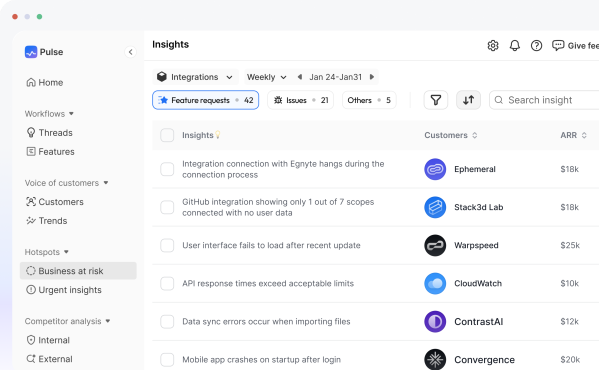
Pulse transforms themes into decision-ready backlog items. Each item carries structured intelligence: customers impacted, ARR exposure, churn probability, segment weighting, and strategic account influence.
Leadership defines strategy rules once, such as:
- Enterprise issues > SMB requests
- Renewal risk > feature requests
- Core workflows > edge cases
Pulse applies those rules continuously as new feedback arrives. The backlog updates itself in real time.
Why This Matters Operationally
When prioritisation is objective, roadmap debates shrink, decisions accelerate, teams align faster, and execution improves. Most importantly, teams ship what actually moves business metrics.
Companies using intelligence-driven prioritisation often see faster release impact, higher retention, fewer reactive builds, and clearer product narratives.
Key Takeaways
- Prioritisation is the bottleneck of product execution.
- Manual scoring cannot scale with feedback volume.
- Dynamic weighting beats static frameworks.
- Business context must be part of prioritisation logic.
- Objective priorities reduce internal friction.
Product Walkthrough: Decision-Ready Backlogs
Pulse replaces opinion with logic. Our prioritisation agentic workflow auto-tags insights by feature, urgency, segment, region, and account value — then allows users to cluster them into real backlog candidates.
As new feedback arrives, priorities shift in real time. The backlog updates itself. No spreadsheets. No debates. Just a decision-ready queue for Product leadership.
Closing Thought
Prioritisation isn’t about volume. It’s about weighted business impact. Good product teams build fast. Great product teams build the right things fast. Prioritisation determines which one you are.

Learn how leading teams turn feedback into actionLearn How Leading Teams Turn Feedback Into Action

AI Turns Customer Research From an Event Into a SystemAI Turns Customer Research From an Event Into a System
Customer research used to be something a team scheduled — a round of interviews, a quarterly survey, a sprint before a launch. Structurally, that was always a snapshot. AI changes the cadence, not just the speed: research becomes a standing picture rather than a periodic report. But a continuously updated picture can look comprehensive without being representative.Customer research used to be something a team scheduled — a round of interviews, a quarterly survey, a sprint before a launch. Structurally, that was always a snapshot. AI changes the cadence, not just the speed: research becomes a standing picture rather than a periodic report. But a continuously updated picture can look comprehensive without being representative.
16 Sep 202616 Sep 2026

AI Isn’t Replacing Product Managers. It’s Repricing Their Time.AI Isn’t Replacing Product Managers. It’s Repricing Their Time.
A lot of a PM’s week was never spent deciding anything — it was spent preparing to decide. AI collapses that preparation time, but the bottleneck didn’t disappear; it relocated. Producing product work is getting cheap faster than making a good product decision is, and judgement is becoming the entire differentiator.A lot of a PM’s week was never spent deciding anything — it was spent preparing to decide. AI collapses that preparation time, but the bottleneck didn’t disappear; it relocated. Producing product work is getting cheap faster than making a good product decision is, and judgement is becoming the entire differentiator.
1 Sep 20261 Sep 2026
Security & Compliance You Can Trust




Security & Compliance You Can Trust
See how Pulse works with your data
Book a Demo